
 Save Pin
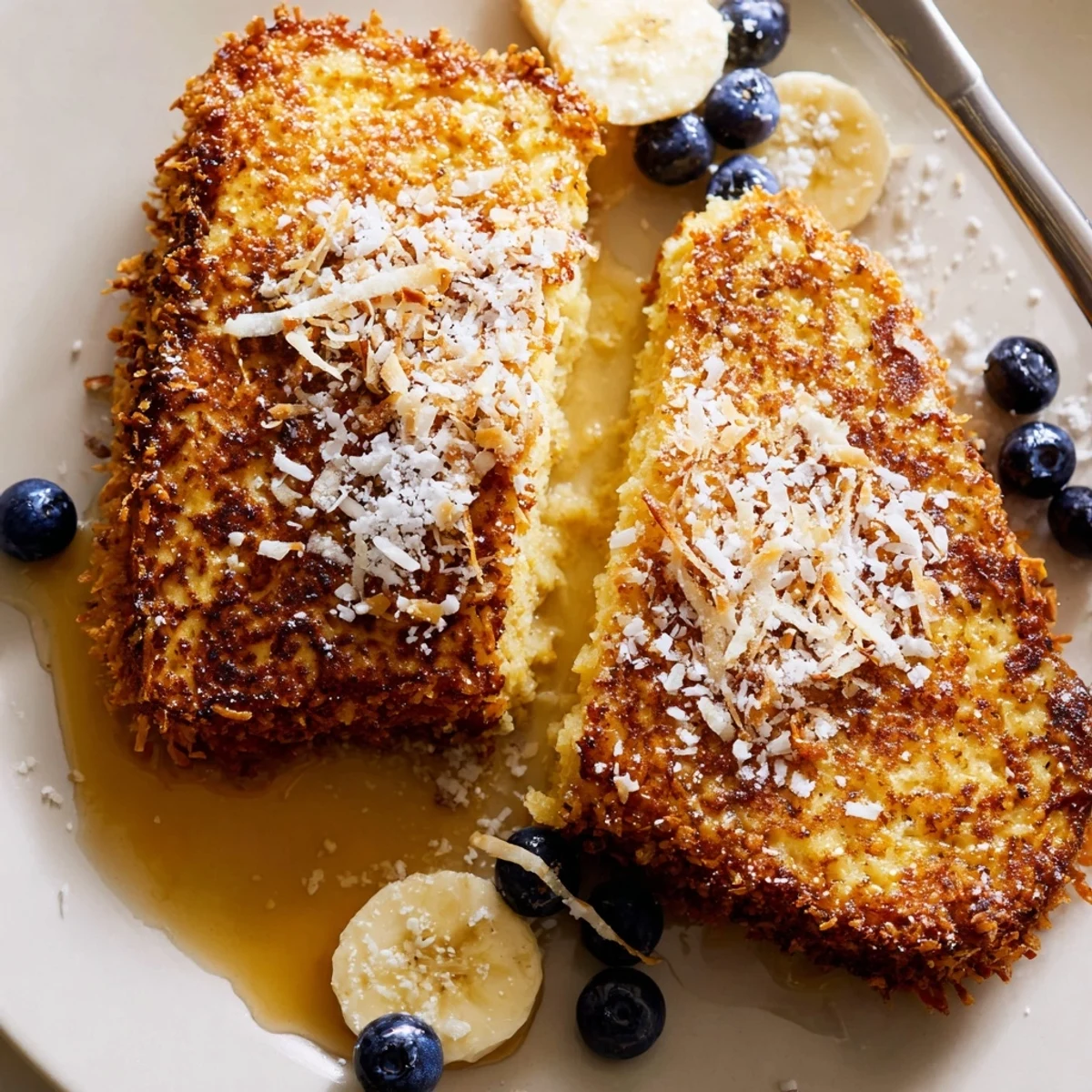
 Whisk eggs, milk, sugar, vanilla and cinnamon to make a smooth custard. Briefly soak thick brioche or challah slices, press both sides into shredded coconut (add panko for extra crunch), then fry in butter and coconut oil over medium heat until deep golden and crisp, about 2–3 minutes per side. Serve immediately with maple syrup, berries or bananas; use coconut milk and oil for a dairy-free version.
The smell of coconut toasting in butter is enough to make anyone stumble out of bed on a lazy Sunday morning, and this recipe proved that to me when my roommate wandered into the kitchen bleary eyed and convinced I had ordered takeout breakfast. There is something almost magical about transforming stale bread into something golden and shattering crisp, especially when you add a blanket of shredded coconut into the mix. This coconut crusted French toast turned a random weekend into a ritual we never stopped repeating.
I first made this for a friend who swore she hated coconut, and watching her go back for a third slice while insisting it was just really good French toast remains one of my favorite kitchen victories. The trick was serving it before she could ask questions, letting the caramelized exterior and pillowy center win her over before her brain caught up.
Ingredients
- Large eggs (4): The backbone of your custard, and using room temperature eggs helps them blend smoother with the milk so you never get streaks of white in your dip.
- Whole milk or coconut milk (240 ml): Whole milk gives richness but coconut milk doubles down on the tropical flavor, and I have tried both with equally happy results.
- Granulated sugar (1 tablespoon): Just enough to encourage browning without tipping this into dessert territory, though nobody would judge you for adding more.
- Pure vanilla extract (1 teaspoon): A little warmth that rounds out the cinnamon and coconut beautifully.
- Ground cinnamon (1/2 teaspoon): It bridges the gap between the French toast you know and the tropical twist you are introducing.
- Salt (pinch): Never skip this because salt makes the coconut taste like coconut instead of flavored cardboard.
- Brioche or challah (8 slices, 2 cm thick): These enriched breads soak up custard like a dream and stay tender inside, which is the whole point of French toast worth eating.
- Unsweetened shredded coconut (100 g): Unsweetened is non negotiable here because sweetened coconut burns before the bread cooks through, a lesson I learned with a very smoky kitchen.
- Panko breadcrumbs (55 g, optional): Mixing panko into the coconut keeps the crust lighter and less dense, giving you shatter instead of chew.
- Butter (2 tablespoons): Butter gives flavor that coconut oil alone cannot replicate, so using both is the power move.
- Coconut oil (2 tablespoons): It has a higher smoke point than butter alone, which means your coconut crust gets golden without burning.
Instructions
- Whisk the custard:
- Crack the eggs into a shallow dish and whisk in the milk, sugar, vanilla, cinnamon, and salt until everything is smoothly combined with no stubborn streaks of yolk floating around.
- Set up the coconut crust:
- In a second shallow dish, toss the shredded coconut with the panko breadcrumbs, using your fingers to break up any clumps so the coating is even and ready to grab onto the bread.
- Soak the bread:
- Lay each slice into the custard for about ten seconds per side, pressing gently so it absorbs the liquid without collapsing into a soggy mess that falls apart in the pan.
- Press on the crust:
- Set the soaked slice directly into the coconut mixture and press down firmly on both sides, really packing the coconut on there because a sparse crust is a sad crust.
- Heat the pan:
- Melt the butter and coconut oil together in a large non stick skillet over medium heat, letting the foam subside before adding any bread so you get an even sizzle on contact.
- Fry until golden:
- Cook the slices in batches without crowding the pan, giving each about two to three minutes per side until the coconut is deeply golden and you hear that satisfying crisp sound when you flip.
- Serve immediately:
- Transfer to plates right away and add whatever toppings make you happy because this French toast waits for no one and the crust softens the longer it sits.
 Save Pin
 There is a specific kind of quiet that happens when everyone at the table is too busy eating to talk, and this French toast has produced that silence every single time I have served it.
Making It Dairy Free
Swapping to coconut milk and frying in only coconut oil transforms this into a completely dairy free breakfast without sacrificing anything in the flavor or texture department. I accidentally made it this way once when I ran out of regular milk and honestly could not tell the difference, which speaks to how forgiving and adaptable this recipe really is.
Choosing The Right Bread
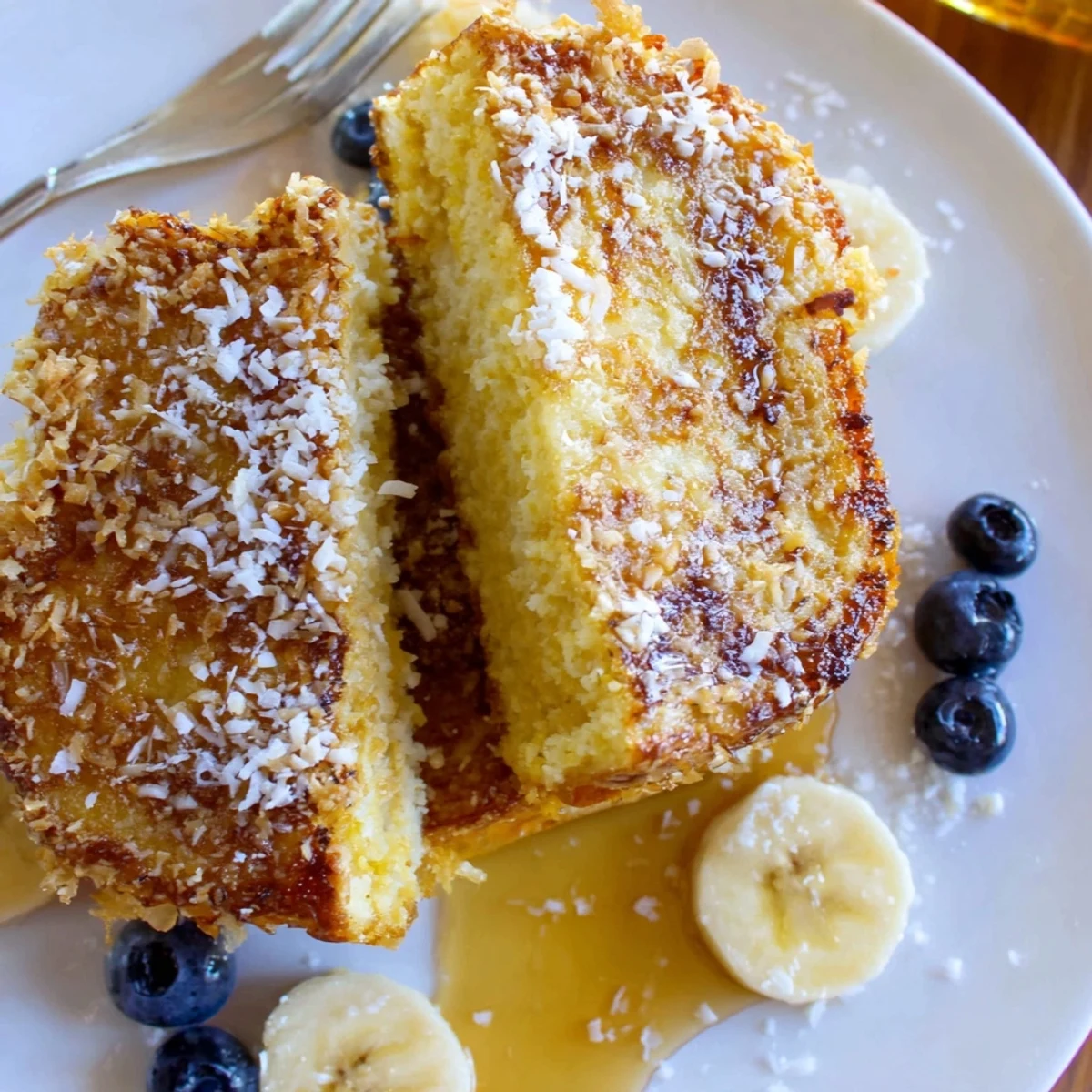
Brioche and challah are the gold standard because their eggy richness creates a custardy interior that regular sandwich bread simply cannot match. If you cannot find either, any thick cut white bread will work in a pinch, but try to avoid anything too dense or seedy because the coconut crust needs a soft base to shine against.
Keeping The Crust Crispy
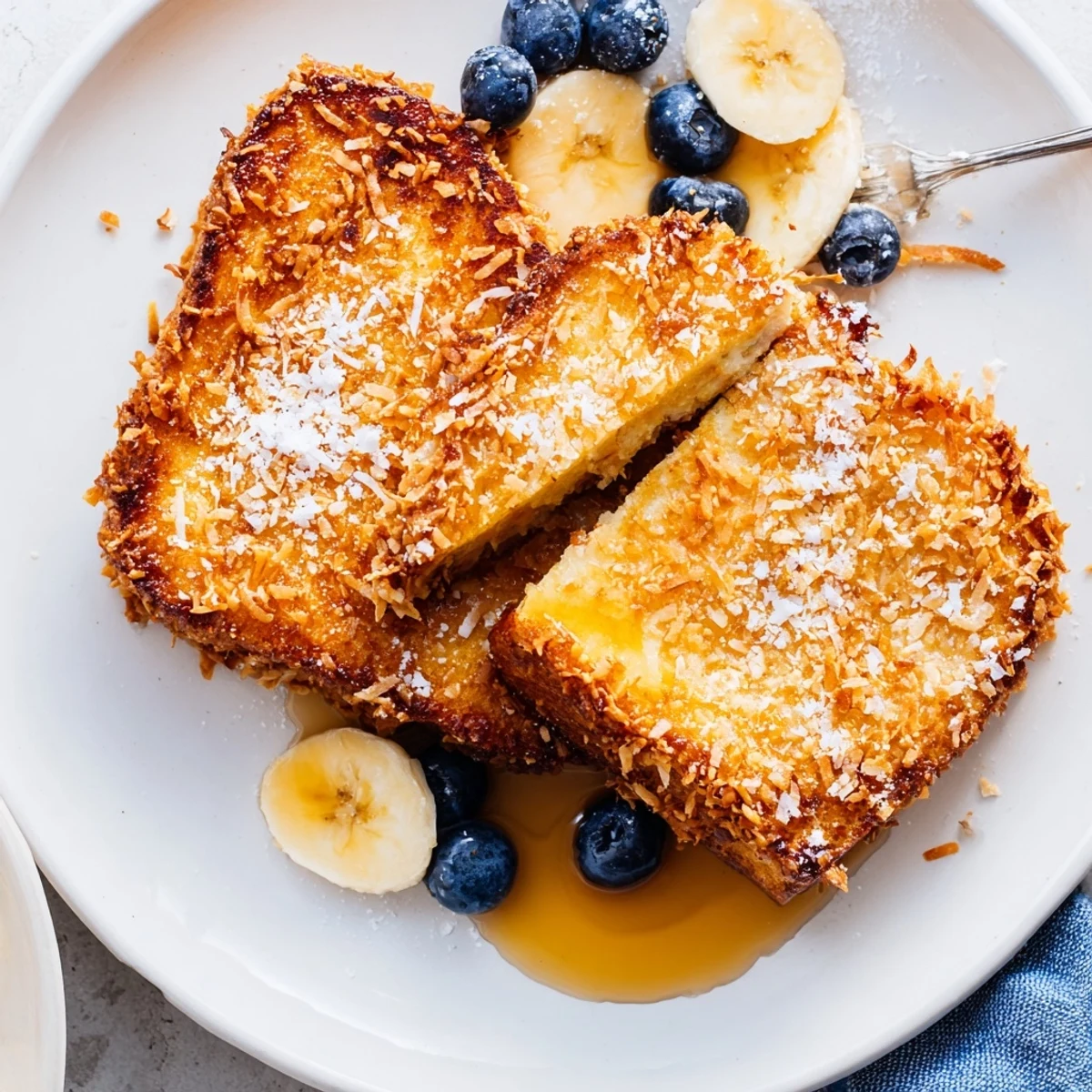
Serving warm is the single most important thing you can do for texture because once coconut crusted French toast sits, steam from the bread softens the exterior and you lose that beautiful crunch. If you need to hold finished slices briefly, set them on a wire rack in a low oven rather than stacking them on a plate where they steam each other into sadness.
- Do not cover finished French toast with foil or the crust will go soft almost immediately.
- A wire cooling rack over a baking sheet in a 100 degree oven buys you about fifteen minutes of perfect texture.
- Fry right before serving whenever possible because nothing beats it straight from the pan.
 Save Pin
 Some recipes become staples because they are easy, and others earn their spot because they make people close their eyes on the first bite. This one does both, and that is really all you can ask of a breakfast.
Recipe FAQs
- → How do I keep the center custardy?
-
Soak bread briefly so it absorbs custard without becoming soggy, cook over medium heat, and flip once the edges are set. Thick slices help maintain a creamy interior while allowing the exterior to brown.
- → What bread works best?
-
Brioche or challah are ideal for their rich crumb and ability to soak custard. Use slices about 2 cm thick; slightly stale bread holds up better than very fresh slices.
- → How can I get an extra crunchy crust?
-
Mix panko with shredded coconut for added texture, press the coating firmly onto both sides of the soaked bread, and use a butter + coconut oil blend to encourage even browning without burning.
- → Is there a dairy-free approach?
-
Yes—substitute coconut milk for whole milk and use coconut oil instead of butter to keep the tropical flavor while avoiding dairy.
- → How should leftovers be reheated?
-
Reheat in a preheated oven or toaster oven at moderate heat (about 175°C / 350°F) for 8–10 minutes to restore crispness. Avoid the microwave, which softens the coating.
- → Can I prep elements ahead of time?
-
You can whisk the custard and toast the coconut mixture in advance. Dip and coat slices just before frying to prevent sogginess, or coat and refrigerate briefly before cooking for convenience.